

by Chris DePuy, 650 Group / October 21, 2026
This week at GTC Berlin, Nokia announced the next phase of its AI-RAN program with NVIDIA, moving the technology from platform launch into live-network integration. The work builds on the first commercial AI-RAN platform the two companies shipped in July and pairs new radio-side AI with a sovereign agentic platform for operator-run network automation. One year into the partnership, AI-RAN has its first call on a commercial network, its first European field trial and a dated path to deployment in 2027 (Nokia press release, NVIDIA announcement).
How close is AI-RAN to commercial deployment?
It depends on the workload and the operator. Radio-side AI is still in validation: the channel-estimation gains are laboratory numbers, and field trials are planned for 2027 at BT and Deutsche Telekom. The edge-intelligence side is further along — T-Mobile has already put an AI-RAN call through a live commercial network, and Elisa is running mixed workloads on one platform in a live radio environment. Operators sitting on dense site portfolios with spare compute between radio cycles have the clearest path; everyone else waits on the 2027 field evidence before touching the RAN silicon cycle (Nokia press release).
Nokia and NVIDIA: what shipped at GTC Berlin
The partnership traces to late 2025, when NVIDIA invested $1 billion in Nokia to pull commercial-grade AI-RAN products into Nokia’s radio portfolio — a move we covered at the time. The companies now apply AI inside the 5G signal-processing chain itself: channel estimation, beamforming, scheduling and multi-user MIMO pairing. Nokia’s AI-native anyRAN software runs on NVIDIA’s Aerial RAN Computer (ARC), giving the radio network a software-defined foundation for AI-powered radio functions (Nokia press release).
The operator evidence is what separates this round of announcements from concept-stage AI-RAN updates. T-Mobile has put the first AI-RAN call through a live commercial network from Bellevue, Washington, running commercial ARC servers with Nokia’s CUDA-accelerated RAN software on massive MIMO radios, connected through an existing 5G Standalone core to a commercial smartphone (NVIDIA announcement). Elisa completed Europe’s first AI-RAN field trial, running voice calls, mobile broadband and vision AI side by side on a single ARC platform over 5G spectrum in over-the-air conditions (Nokia press release). Deutsche Telekom validated the commercial platform in its Bonn and Oulu labs, where AI-based uplink channel estimation produced gains of 10-15% in early laboratory measurements; field validation comes next, with trials planned for 2027 (Nokia press release). BT has a live-network trial planned for Birmingham in 2027, and Orange is evaluating Nokia’s 5G software over NVIDIA ARC with spectral efficiency as the focus (NVIDIA announcement).
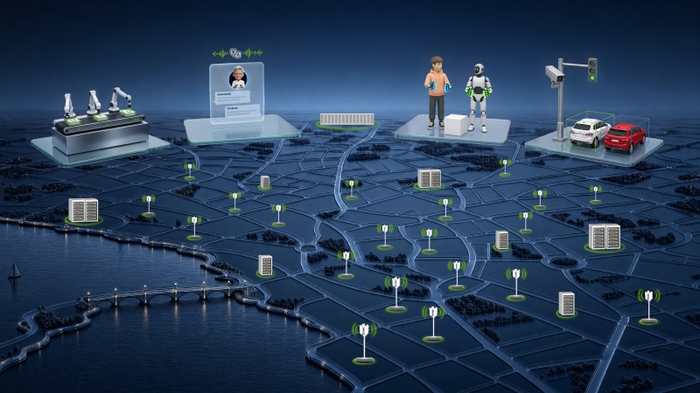
The hardware path widened too. NVIDIA added two ARC form factors, MGX 2U and MGX 4U, aimed at dense intelligence and radio workloads at centralized RAN sites, built on RTX PRO 6000 Blackwell Server Edition GPUs with x86 and NVIDIA Vera CPU options, and Dell Technologies, Quanta Cloud Technology and Supermicro are lined up to sell ARC-ready systems (NVIDIA announcement). NVIDIA counts nearly 20 telecom operators with public AI-RAN collaborations on anyRAN and ARC as of October 2026, and nine operators across EMEA have NVIDIA-powered infrastructure in build-out or expansion: new sites at CRA (Czech Republic), etisalat (UAE), Silknet (Georgia) and TIM (Italy), plus expansions at Cassava, Deutsche Telekom, Fastweb + Vodafone, Kazakhtelecom and Orion Telecom (NVIDIA announcement).
The sovereign agentic platform answers a different problem. Nokia is folding NVIDIA Nemotron open models into its Autonomous Networks Suite, with the NVIDIA Agent Toolkit supplying governed agents that run operations spanning radio, core, transport and fixed networks under operator control (NVIDIA announcement). Cisco has fine-tuned Nemotron models into its Crosswork AI layer for IP and optical transport (NVIDIA announcement). Network autonomy has been stuck at vendor-captive copilots; open models deployed inside the operator’s own domain shift ownership of the automation stack to the operator, which is what the sovereignty label actually buys.
Our takeaway
Uplink channel estimation is the first target, and gains of 10-15%, if they hold in the field, these gain become capacity operators can sell. Of course, the field trials will prove out these gains in 2027. The announcement also keeps pressure on the merchant-versus-ASIC RAN silicon question we framed at MWC 2026.
The 2027 window is the milestone that matters: distributed rollout and the evaluation of commercial AI-RAN services are expected next year (Nokia press release), and BT’s Birmingham trial will be the first UK live-network test. If ARC-ready servers from Dell, Quanta Cloud Technology and Supermicro start appearing in operator RFPs in 2027, AI-RAN becomes a procurement line item rather than a trial program.
650 Group researches several of the technologies we covered in this blog, including Data Center Co-Location and Cloud and Service Provider Outdoor, and more.
