

When we left Mobile World Congress 2026 in March, we framed AI RAN as a strategic split: Nokia and Samsung betting on merchant silicon (CPUs and GPUs), while Ericsson, Huawei, and ZTE continued to rely on purpose-built ASICs (MWC 2026: The RAN Chip Wars). Six months later the tactical debate over who would actually ship AI into the RAN has effectively ended. Since that post, essentially every major radio vendor — including the three we placed in the ASIC camp — has now publicly embraced AI-native RAN as its stated network direction. The interesting question is no longer whether vendors will put AI in the RAN; it is whose silicon they will do it on. All five have converged on the concept while diverging on silicon, tracking almost exactly along the fault lines we mapped at MWC.
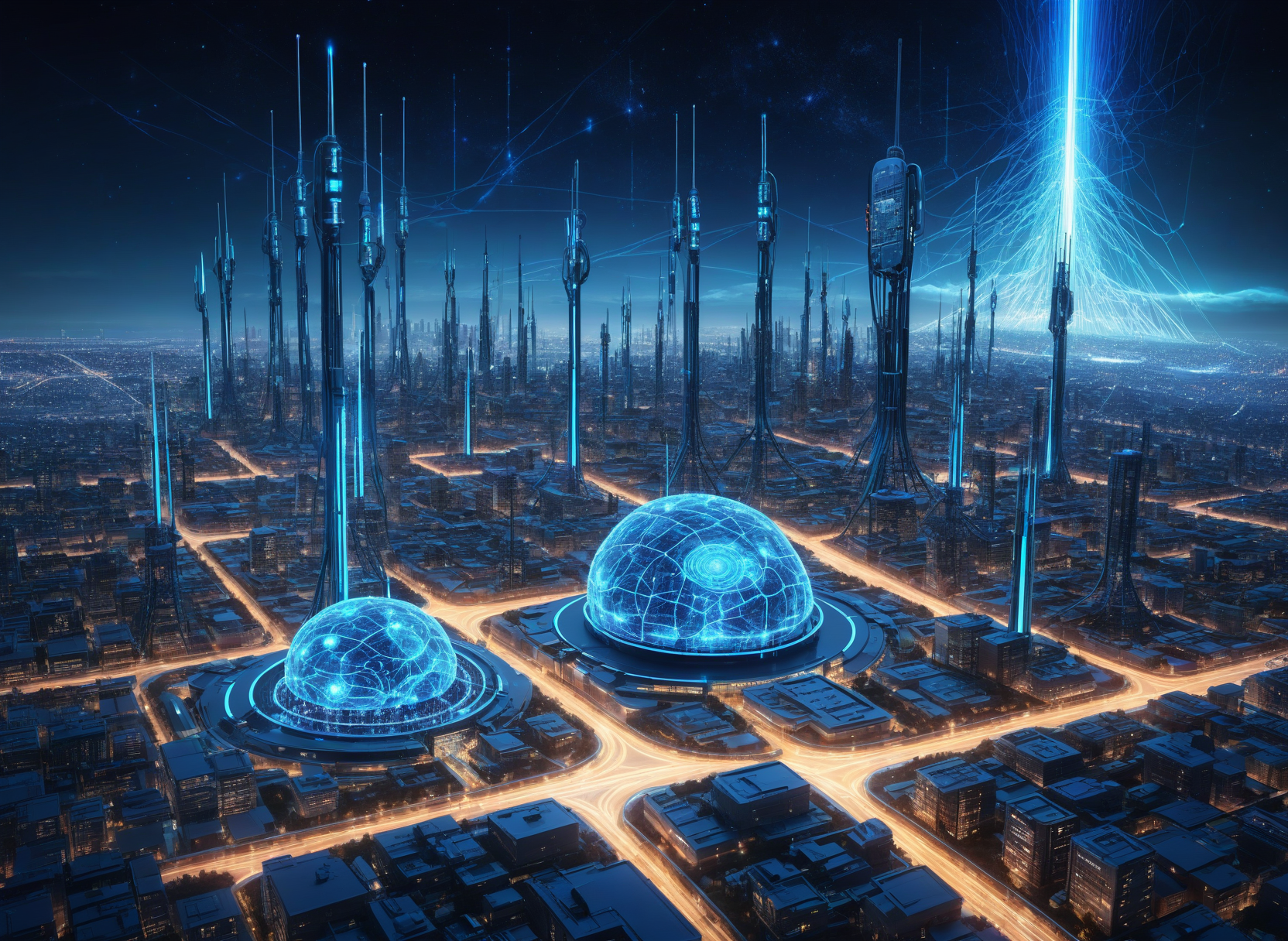
The merchant camp has only pushed harder. Nokia, anchored by NVIDIA’s October 2025 $1 billion investment, used MWC 2026 to add customer integrations and functional tests, then in July launched what it calls the industry’s first commercial AI-RAN platform — anyRAN on NVIDIA’s Aerial platform. Nokia claims spectral-efficiency gains of more than 20% today, rising to 50% by 2027 and beyond 100% by 2028, sold on a software subscription model. Samsung doubled down on its multi-CPU strategy: at MWC 2026 it announced a multi-cell NVIDIA vRAN test and, with AMD, moved from verification to commercial deployments on commercial-grade CPUs, then validated user-level AI-RAN optimization with DOCOMO in August. Both now market AI RAN as a standing product line rather than a roadmap.
The three ASIC-camp vendors have embraced the AI RAN concept — but on their own silicon terms. Ericsson, which introduced AI-ready radios with neural network accelerators in Ericsson Silicon ahead of MWC and partners with Intel only for Cloud RAN, launched an “AI in RAN” software subscription in June, delivering up to 20% higher downlink throughput across more than 15 trials while running on Ericsson Silicon. Huawei unveiled an “AI-Centric Network” with its industry-first RAN Agent and Agentic MBB toward a 900-billion-agent “Agentverse,” on its own Ascend NPU stack, and co-launched the OpenAN open-source autonomous-network project with China Mobile and other partners. ZTE’s AIR MAX solution embeds AI radios delivering 35–40% lower energy on a heterogeneous ASIC AI + xPU architecture, and ZTE is the most explicit that AI-native does not equate to GPU-centric computing.
The convergence on AI-native RAN is real, but the silicon fault line we described at MWC 2026 has not disappeared — it has matured into a commercial contest. Nokia and Samsung are selling the merchant-silicon future with commercial platforms, deployments, and subscriptions; Ericsson, Huawei, and ZTE have adopted the AI RAN framing while keeping their custom silicon and accelerators, arguing for energy and spectral efficiency without a GPU power envelope. The next two years of deployments — Nokia’s pilots at the end of 2026, Samsung’s commercial vRAN, Ericsson’s AI-in-RAN subscribers, and the Chinese vendors’ AI-centric networks — will show which model delivers better economics at scale. What is no longer in question is that all five major vendors have embraced the concept of AI RAN.
Before MWC 2026 vs. Today
| Company | Before MWC 2026 (our March post) | Today (Sept 2026) | Point of view |
| Nokia | Merchant camp — NVIDIA GPU baseband, $1B partnership | “First commercial AI-RAN platform,” 100%+ spectral gains by 2028, software subscription | Most aggressive — AI RAN is a product, not a roadmap. Source |
| Samsung | Multi-CPU merchant (Intel Xeon, AMD, NVIDIA Grace) | Commercial AMD EPYC AI vRAN, NVIDIA multi-cell test, DOCOMO user-level AI-RAN | Deepening multi-vendor merchant bet, now scaling commercially. Source |
| Ericsson | ASIC camp — custom silicon + neural accelerators, Intel only for Cloud RAN | “AI in RAN” software subscription on own Ericsson Silicon | Embraces AI-native RAN but guards silicon sovereignty. Source |
| Huawei | ASIC camp — custom RAN ASIC + Ascend NPU, AI-Centric | AI-Centric Network, RAN Agent, Agentic MBB, OpenAN | Broadest AI RAN vision, on its own silicon and NPU. Source |
| ZTE | ASIC camp — heterogeneous ASIC AI + xPU | AIR MAX, heterogeneous AI-native (explicitly not GPU-centric) | Embraces AI RAN but rejects merchant-GPU-centrism. Source |
650 Group researches several of the technologies we covered in this blog, including Mobile Radio Access Network (Mobile RAN), Data Center / Co-Location / Cloud, and more.